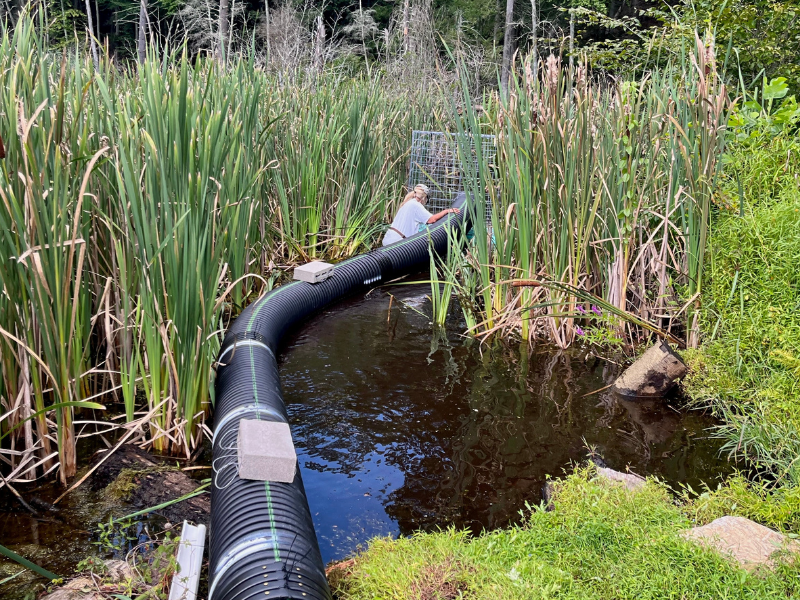
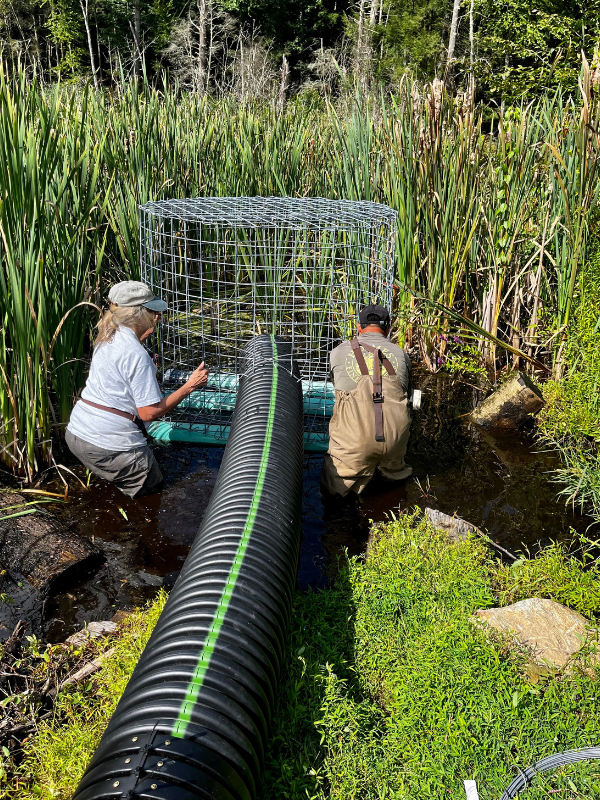
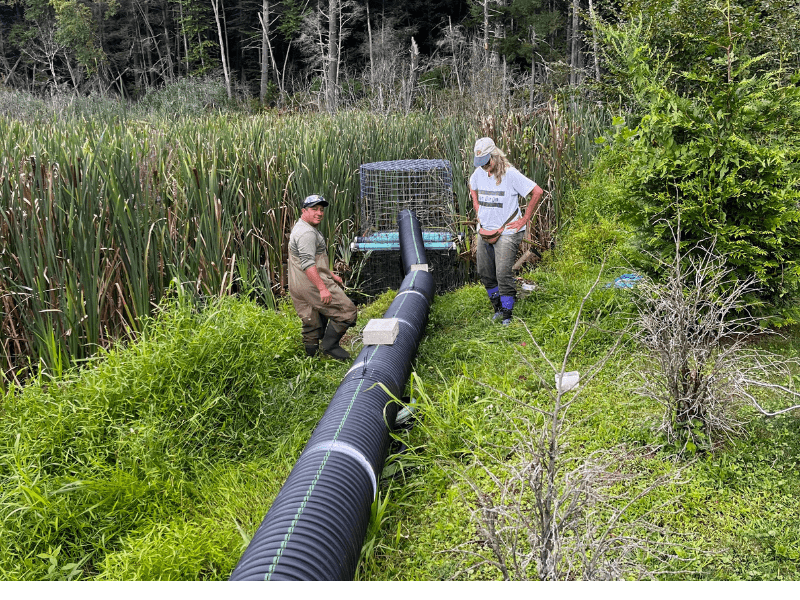
Our first step was to maneuver the device into the open water, positioning it carefully to ensure optimal flow and stability.
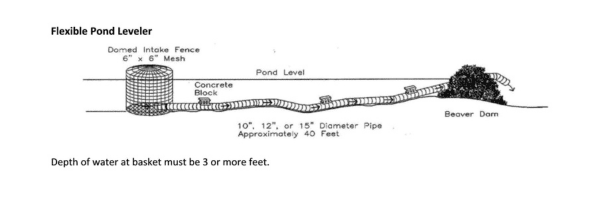
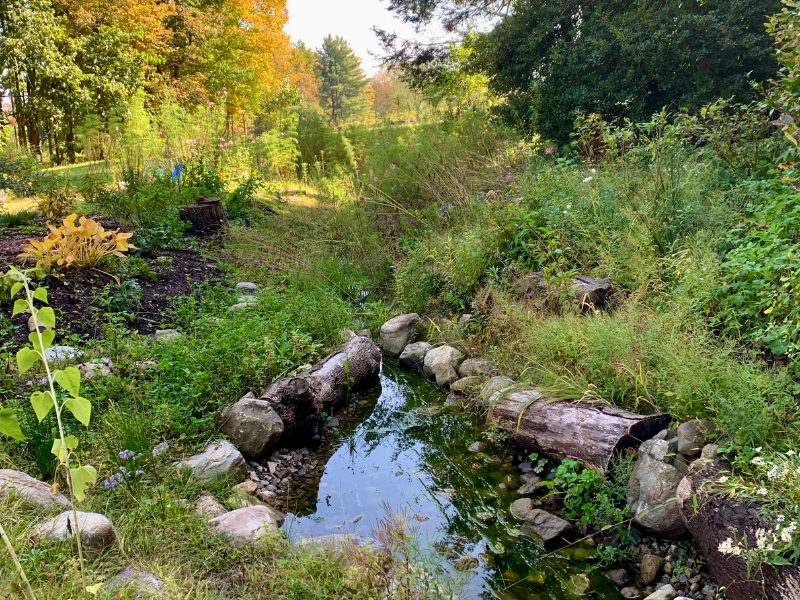
We recently tackled a unique challenge at McLaughlin Vineyard by supporting Dianne Honer, Nuisance Wildlife Control Operator with Beaver and Wildlife Solutions out of Chester, CT. A large beaver dam caused significant flooding, making the entrance nearly impassable. The beavers had built an impressive dam, but it clogged the outflow, leading to rising water levels. To resolve this while respecting the beavers’ habitat, we installed a beaver pond leveler—a pipe system that lets water flow steadily through the dam without dismantling it. This allows the beavers to keep building while maintaining proper water flow, preventing future flooding.
This win-win solution helps support the vineyard’s needs and the natural ecosystem. We were more than happy to step in (and jump in) to help!
Unique challenge on your property? Reach out, we may be able to help – even if it’s out of the ordinary.
Many people also report feeling a sense of meaning and purpose when they garden, which is an important contributor to well-being.
“Working with plants, people kind of see where they fit in the world,” said Emilee Weaver, the program manager of therapeutic horticulture at the North Carolina Botanical Garden. “They see why they’re valuable because of the cause-and-effect relationship that plants so visibly articulate.”
In addition, gardening, especially in community or allotment gardens, can help people build social connections and combat loneliness. In the Colorado study, participants talked about the relationships they developed and said they felt more bonded to their community through gardening.
“They’re fostering social connection. They’re getting more involved,” Dr. Litt said. “They talk about a sense of belonging. They talk about shared learning. All of these processes are really important for mental health.”
If you garden at home, putting a bed in the front yard instead of the back could similarly spur conversation and bring together neighbors, she added.
It’s possible that the act of getting your hands dirty could have a positive effect on your mood, as well. There is some research to suggest that bacteria in soil can alter the microbiome in a way that reduces stress and inflammation.
If playing in the dirt isn’t your thing, just being outdoors in a natural environment can provide stress relief and help people recover from mental fatigue, said Carly Wood, a senior lecturer in sport and exercise science at the University of Essex in England, who researches the mental health benefits of nature-based interventions, including gardening.
That may be because being in nature activates the mind and senses in a way that takes your attention off other things. “Natural environments are fascinating,” Dr. Wood said. “All their features inherently engage us and kind of distract us, in a way, from our stressors.”
And you don’t need to spend all day outdoors to reap the benefits, she said. “Five minutes is enough to improve your self-esteem and your mood.”
For many, searching for misplaced keys or phones is the extent of their explorations. However, botanists, like Molly Parren and Grace Glynn, dive into fields and riverbanks in pursuit of elusive plants. This poetic life was exemplified when Vermont announced the rediscovery of false mermaid-weed, thought to be locally extinct.
The discovery began on May 7 when Parren, a turtle biologist, spotted rare wild meadow garlic and sent a photo to Glynn, Vermont’s state botanist. Glynn, however, noticed another plant in the photo: Floerkea proserpinacoides, or false mermaid-weed, not seen in Vermont for over a century.
Excitedly, Glynn and her colleague Matt Charpentier, who had long sought this plant, celebrated the find. Glynn rushed to confirm the presence of the plant and found a dense carpet of it.
Rediscoveries like this are common in botany, where experts constantly seek and document rare plants to protect them. Glynn, relying on reports from enthusiasts, maintains a list of rare species, continually updated based on field findings.
The false mermaid-weed’s reappearance might be linked to recent flooding, which possibly created a more hospitable habitat. To preserve this rare species, Glynn will send seeds to a Massachusetts seed bank.
The rediscovery of false mermaid-weed is a beacon of hope amid environmental challenges, reflecting the perseverance and dedication of botanists.
ALERCE COSTERO NATIONAL PARK, Chile — Dr. Toby Kiers, an evolutionary biologist from the Free University of Amsterdam, is on a groundbreaking mission to study underground fungi, which could play a crucial role in addressing climate change.
Dr. Kiers and her team collect soil samples to analyze the fungal networks beneath our feet. These fungi can store large amounts of carbon, help plants survive droughts, and reduce the need for chemical fertilizers by feeding nutrients to crops. Dr. Kiers aims to create a comprehensive atlas of these underground fungi, highlighting their vital functions.
Fungi, particularly mycorrhizal fungi, form symbiotic relationships with plant roots, exchanging nutrients and carbon. This network acts as a significant carbon sink, essential for mitigating global warming. Despite their importance, fungi are often overlooked in environmental protection efforts.
The expedition in Chile, guided by an algorithm predicting high fungal biodiversity, involves collecting and analyzing soil samples to identify the fungi present and their functions. Dr. Kiers plans to gather 10,000 samples over 18 months to map the global distribution and capabilities of these fungi.
Dr. Kiers emphasizes the urgent need to protect these fungal networks as they face threats from human activities and climate change. Her work aims to document and understand these hidden allies before they disappear, providing critical insights into how they can help us adapt to a hotter planet.
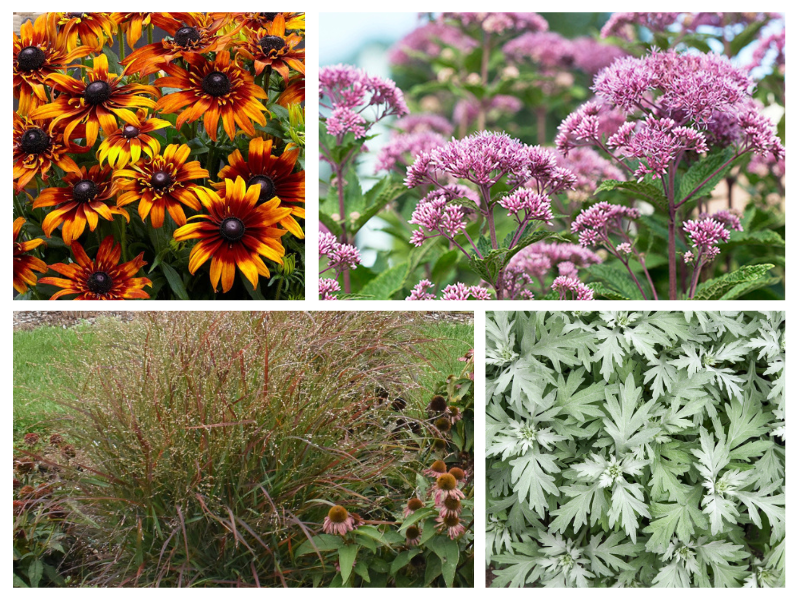
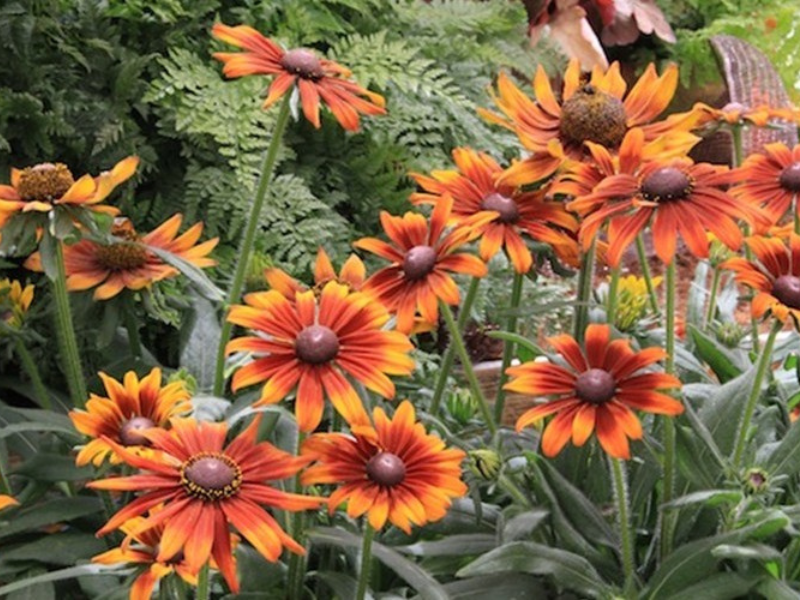
If you lean toward the new and different, consider the Summerina series of echibeckias, a recently developed cross between coneflowers (Echinacea) and gloriosa daisy (Rudbeckia). This newcomer was also showy enough to win a couple of awards in 2023 and is touted as being the most interesting plant in the world for the big flowers, fast growth, long bloom time, disease-resistance, and flower colors that offer bursts of rich browns, oranges, and yellows. The plants have the habit and central flower cones of coneflowers but the warm colors of gloriosa daisies. Echibeckia prefer full sun and overwinter best in a protected microclimate, such as along a heated house wall.
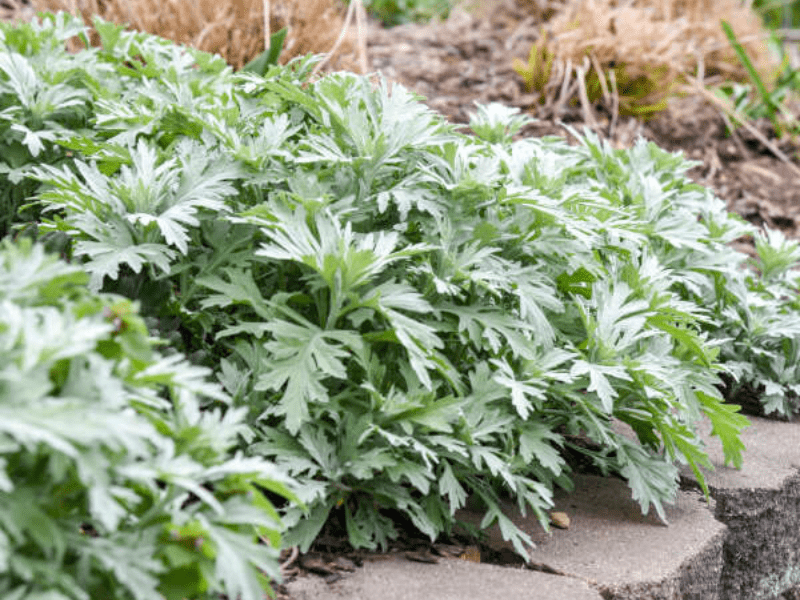
Artemisia ‘Silver Lining’
Here’s another new deer and rabbit-resistant plant where the foliage is the starring trait. Artemisia ‘Silver Lining’ has frilly silver leaves and a compact, no-flop growth habit. This low, mounding plant with cut-edged silver leaves is a hybrid of a native species (Artemisia ludoviciana) that brings that plant’s leaf color and cold-hardiness but not its spreading runners (which can make the straight species overly aggressive in a perennial garden). This newcomer doesn’t flop apart as many artemisias do, and it makes a good foliage “spiller” in pots and a filler in a sunny landscape bed. Plants grow about 16 inches and tolerate drought and poor soil.
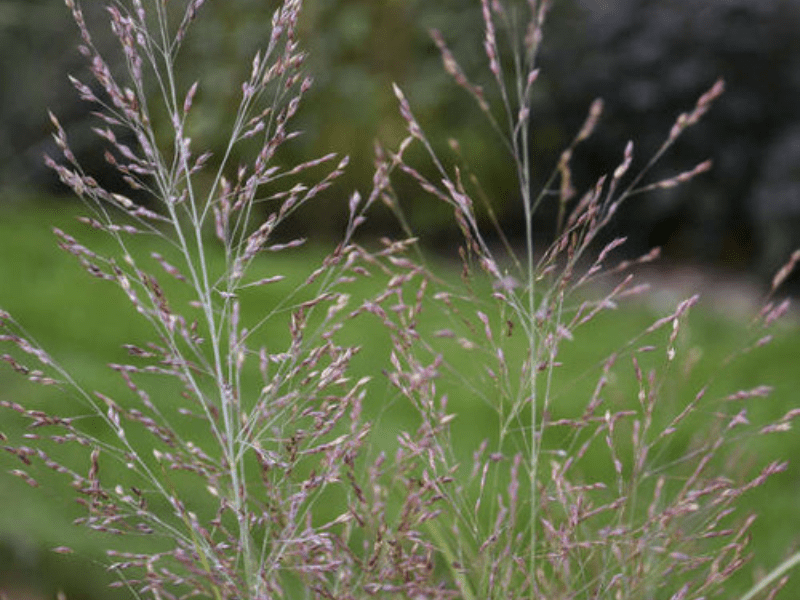
Switchgrass ‘Red Flame’
Another native species that deer usually don’t bother is red switchgrass. ‘Red Flame’ plants grow about three-and-a-half feet tall, including the purplish-red flower plumes that form in late summer. The blades start out blue/green and then turn wine-red as the stems age to a wheat color creating a great contrast just in time for the fall season. Plants grow about three-and-a-half feet tall, including the purplish-red flower plumes that form in late summer. ‘Red Plume’ grows best in full sun and tolerates a range of soil and moisture conditions.
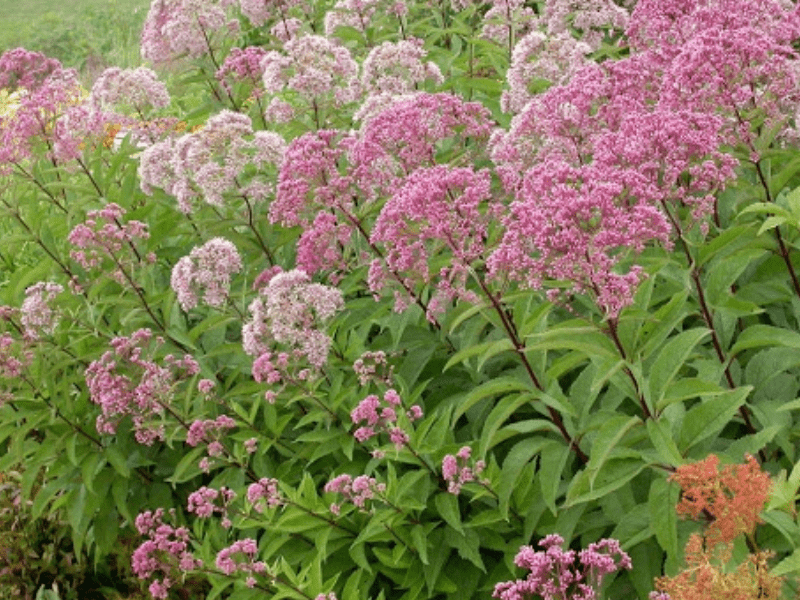
Eupatorium Little-Pye
This trouble-free, native that’s a veritable pollinator magnet is Joe Pye weed (Eupatorium), but its original form grows a hefty five to six feet tall. That’s too big for a lot of home gardens. Eupatorium Little-Pye is a compact new native topping out at approximately 14 inches tall and wide. Plants flower purplish-pink (peaking in July), do well in full sun to light shade and are hardly ever bothered by animals, including deer. Like all Joe Pye, this one is also tolerant of wet soils.
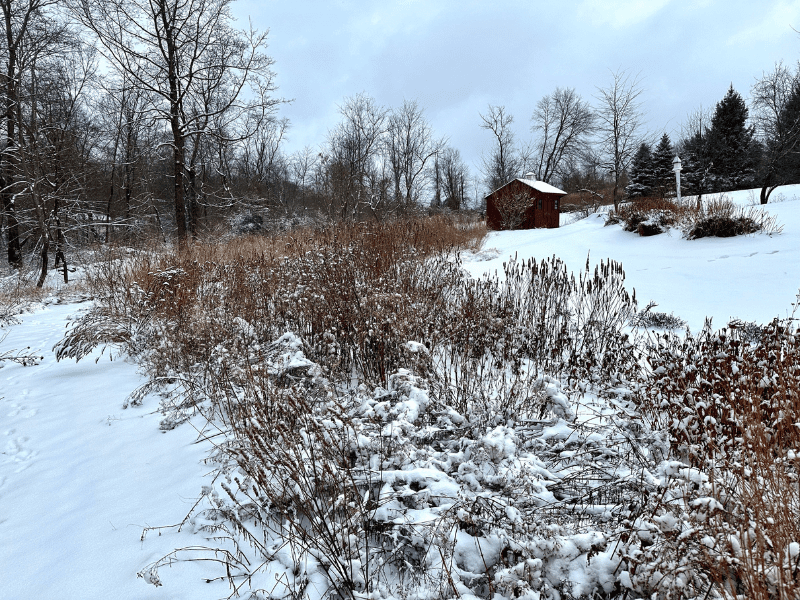
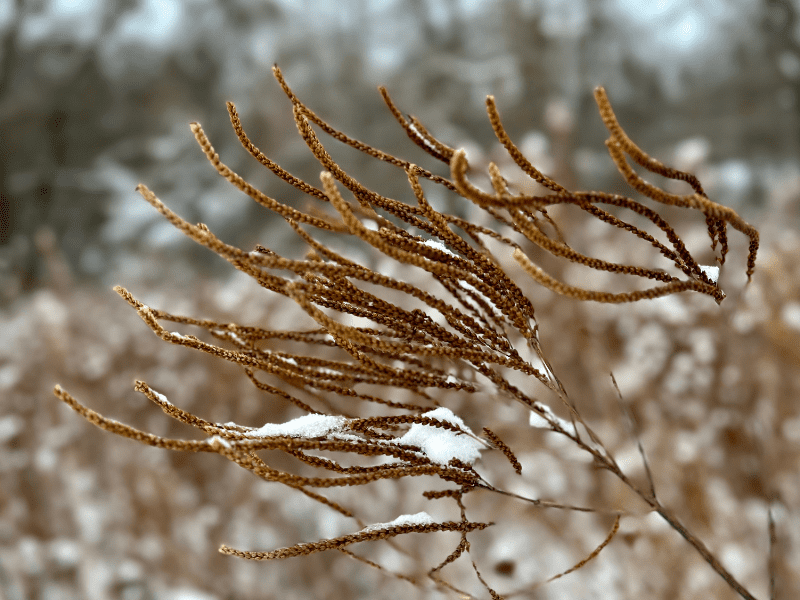
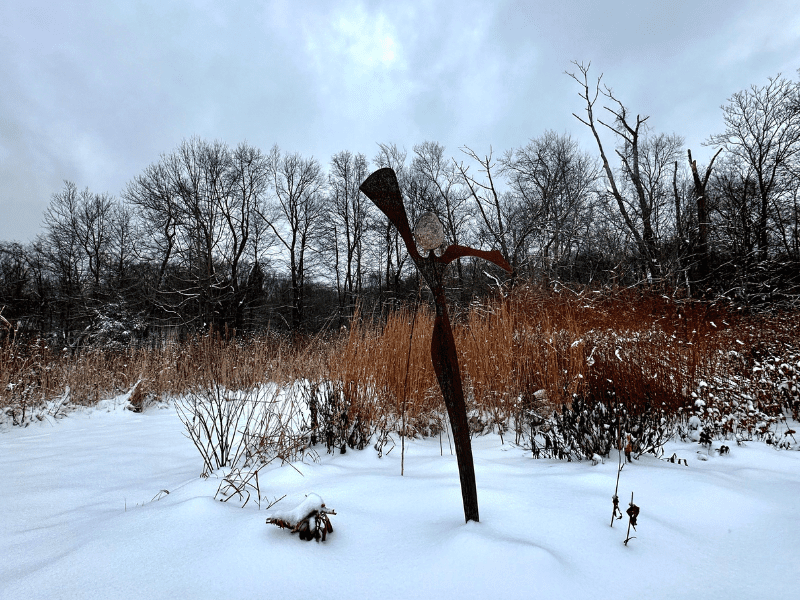
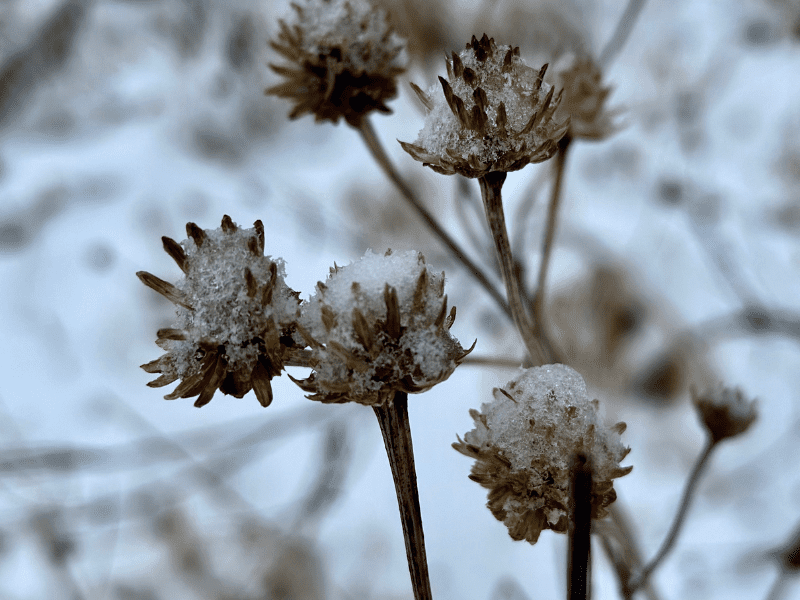
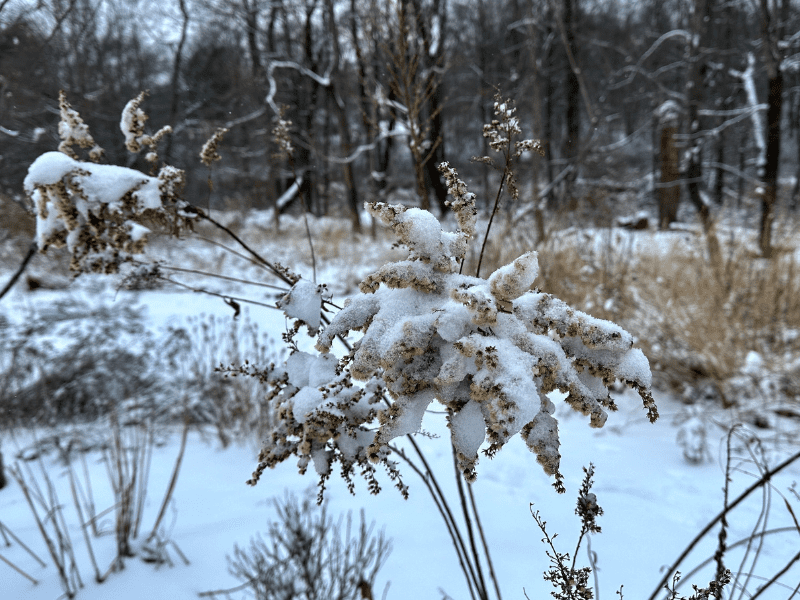
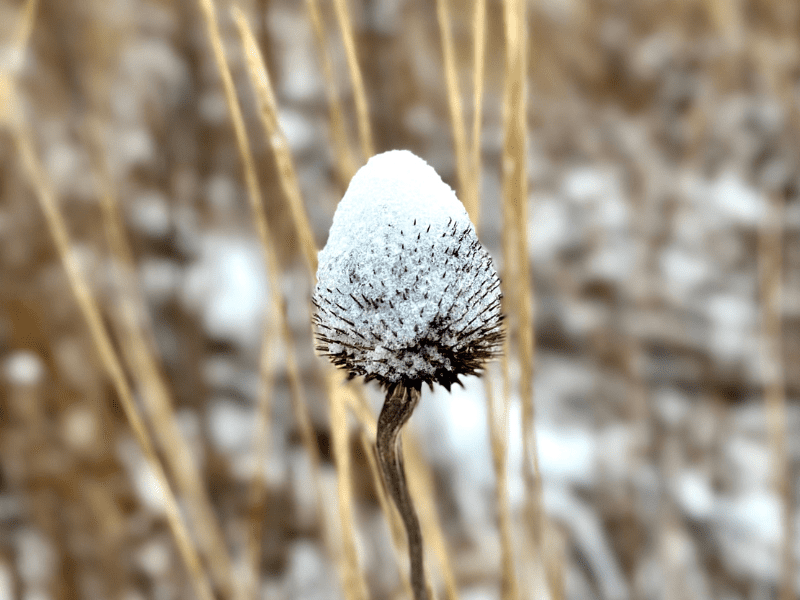
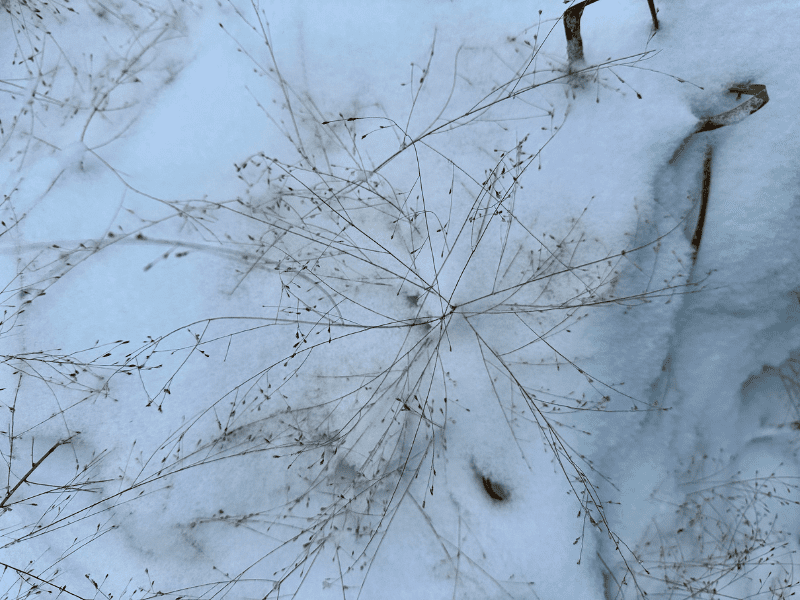
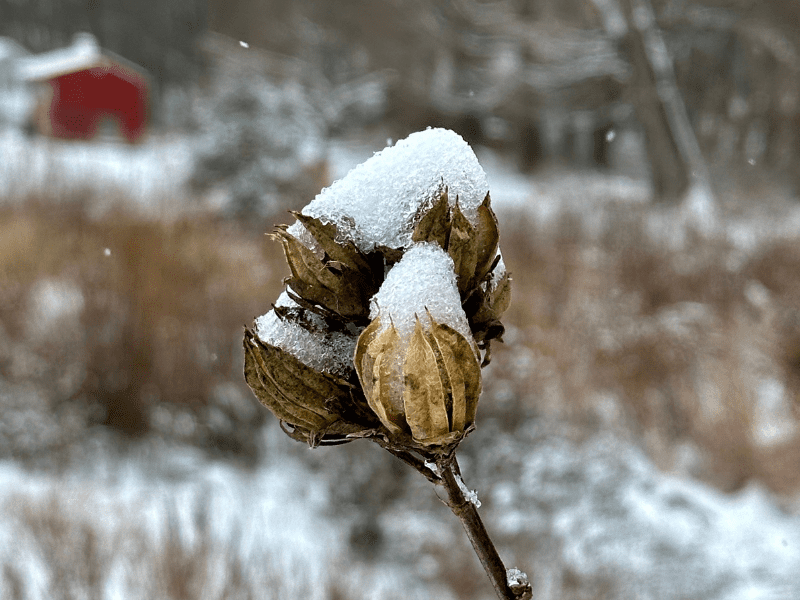
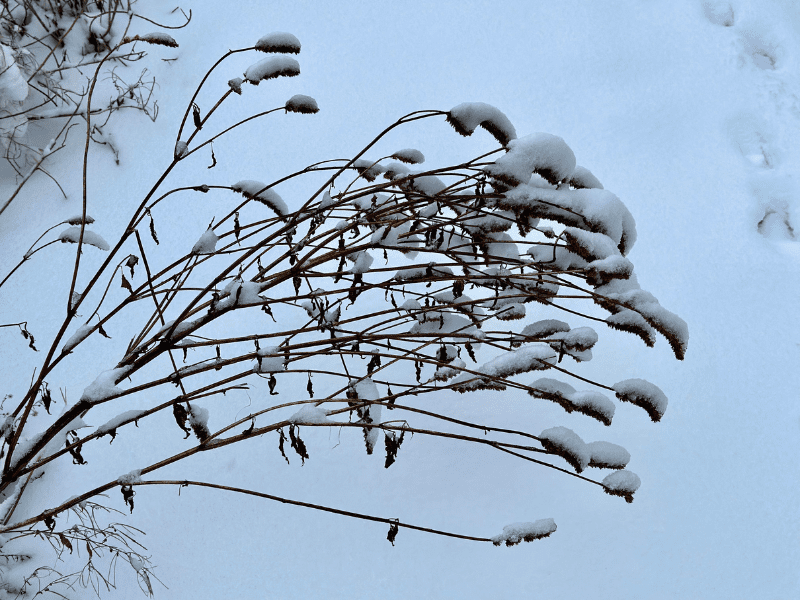
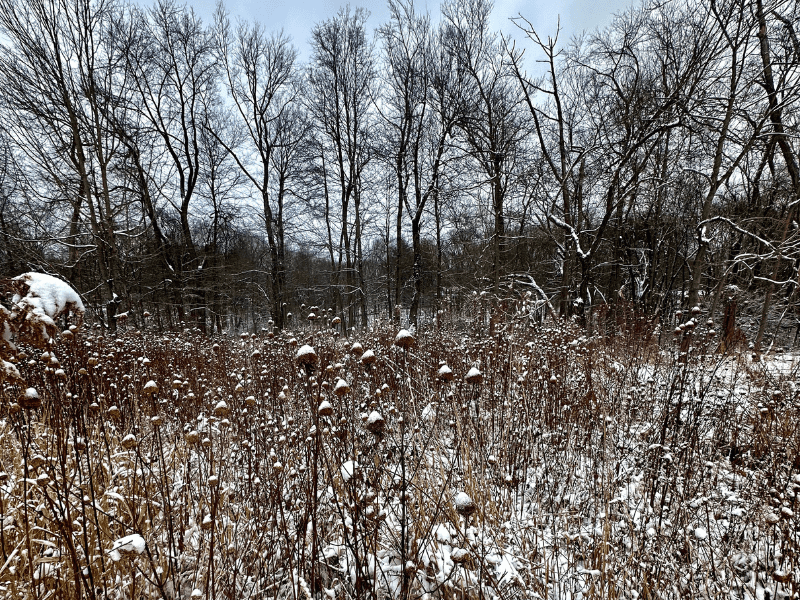
In the heart of winter, a meadow trades the bright purples, yellows, and shades of green of the growing season for softer shades of sepia and brown. These muted tones could fool us into thinking not much is happening this time of year, but in reality, life is everywhere when you look for its clues – and careful observation yields beautiful, art-filled results.
Verbena hastata, blue vervainWinter interest times two ~ native plants and sculpture.
Solidago, goldenrodEchinacea, coneflowerSoft and ethereal in the snowStoke’s aster ~ dormant phaseFrom a design perspective, dark seed cones bring a dramatic note and vertical accent to a garden’s winter picture.
My backyard landscape has evolved over the last 17 years. Whether viewed from my kitchen window, sitting at the ornamental fish pond, or strolling the mowed paths of the lawn, I want my yard to represent a love of shape, color, and whimsy. It’s not just about plants! Every season, aspects of my garden change for the better. Clearing stone walls, creating a meadow, replacing unsafe trees, and building a new walkway to the back door are improvements that enhance my experience living on this beautiful property more every year.
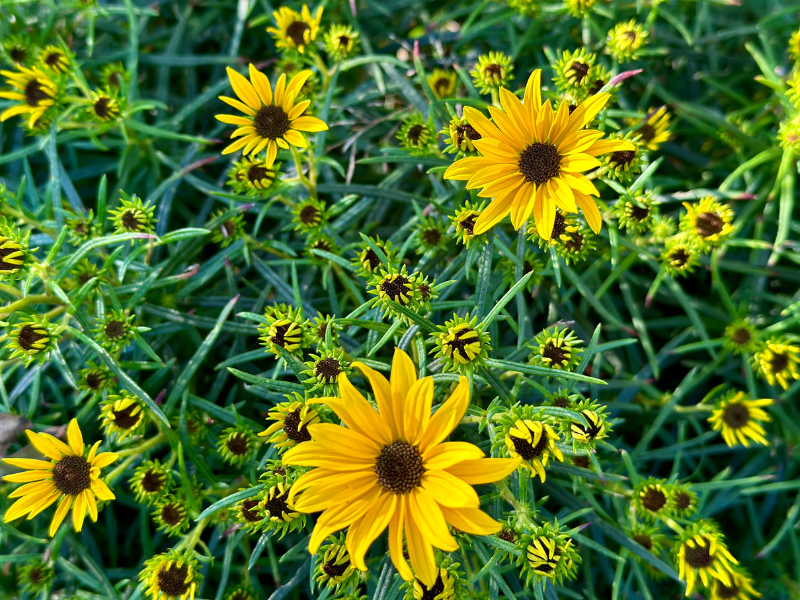
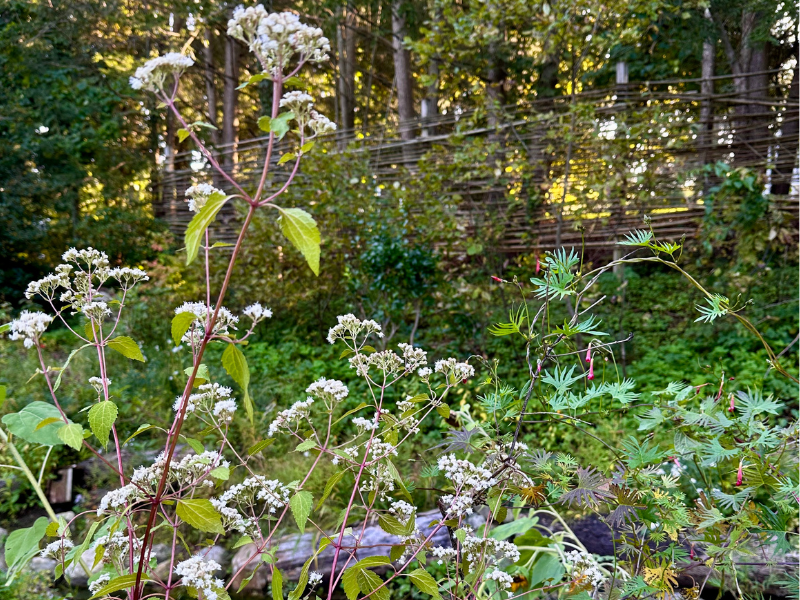
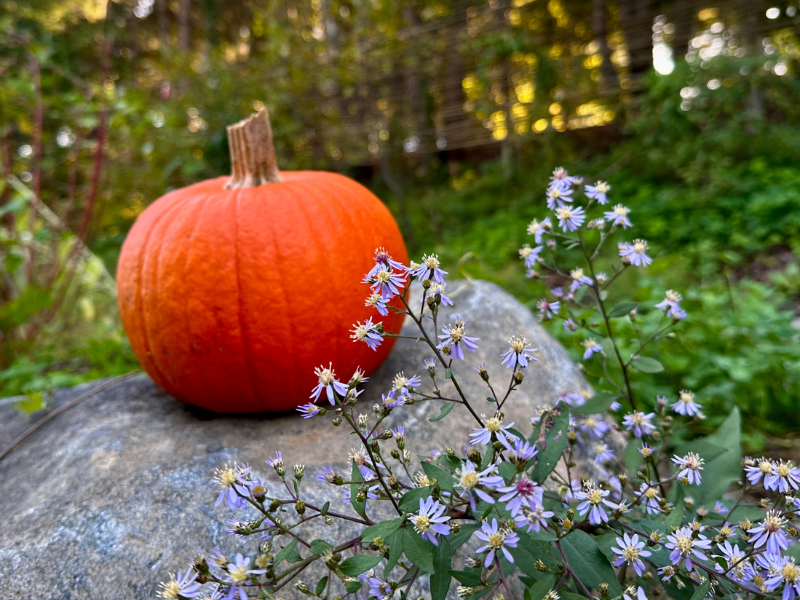
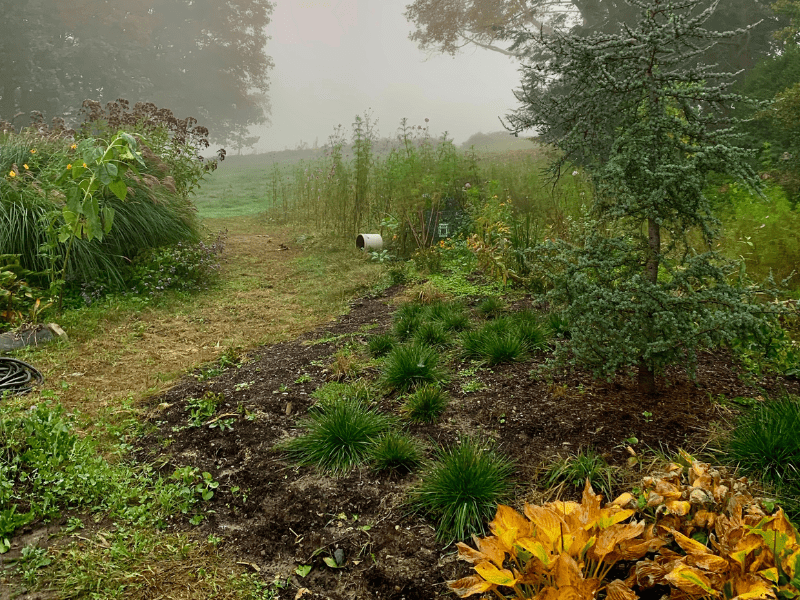
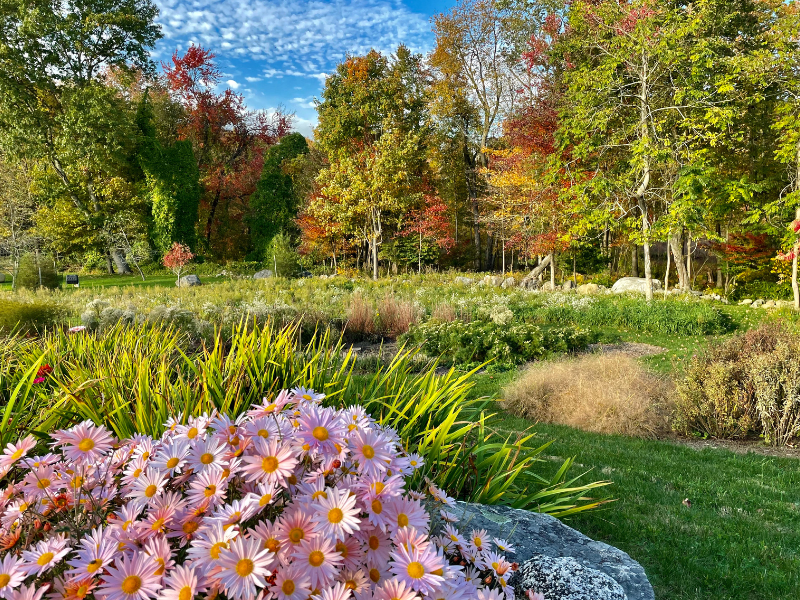
Coreopsis (Tickseed) comes to life in the fall.Eupatorium formosanumCommon blue asterArt in the garden.Physostegia virginiana (Obedient Plant) with a happy pollinator.A water feature for all…pollinators and people.Beautiful even past its prime and going to seed.An original New England stone wall sits at the back of the property – be on the lookout!Beauty in fall’s morning mist.
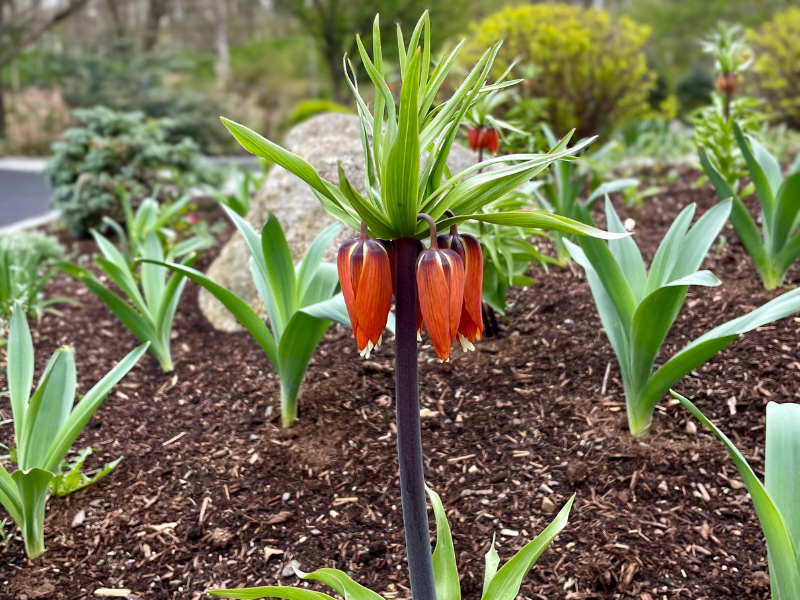
Fritillaria meleagris – also known as guinea hen flowers
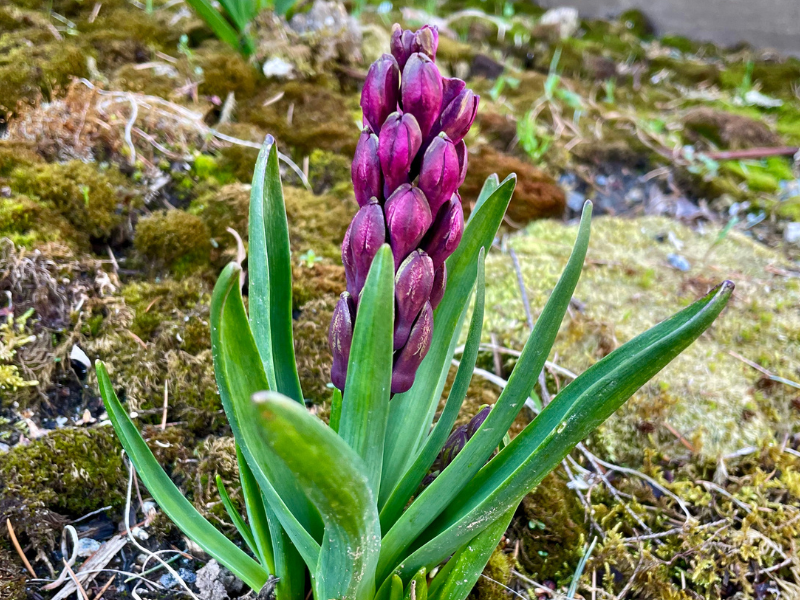
Planting bulbs now is a great idea for spring flowers later. But check out our valuable tips before you start digging. Bulbs are one of the best ways to have a colorful spring garden, but when it comes to fall bulb planting, there are a few things you’ll need to know. Try out these tips this fall, for beautiful blooms next spring!
1. The Right Way to Plant Fall Bulbs As you are planting bulbs, there are a few things to remember. First, make sure that you choose a spot with at least 6 hours of sunlight. For early bloomers, like daffodils, you can plant in a spot that gets sun before the trees have leaves in the spring. By the time trees start shading your bulb bed, early-blooming bulbs should be almost finished for the year. Bulbs also like soil that is rich with organic matter or compost, and they love well-drained soil. Soggy soil or overwatering will cause them to rot. Finally, when you are ready to plant, the general rule of thumb is to plant a bulb three times as deep as the bulb is tall, making sure the pointy part is facing upwards.
2. Prepare the Bulb Bed Well
You don’t want to simply dig a hole and plant the bulb. For the best growth, make sure that you prepare a bed ahead of planting. This means that you’ll need to remove weeds and loosen the soil. It is also a good idea to add compost for nutrients or sand for drainage before you plant.
3. Buy at the Right Time This is a tough one because nowadays, many stores are selling their fall bulbs in July or August because they want gardening supplies out of the way in time to set up holiday displays. This means that you’ll either need to store your bulbs carefully for a month or three, or you’ll need to order online or by mail at planting time so that you have fresh, healthy bulbs. If you are stuck buying your bulbs early, then make sure they are firm and plump, with no mold or rot. Leave them in the bag that you purchased them in, and then place that bag in a paper lunch bag so that you can store the bulbs in the fridge without making a mess.
4. Plant at the Right Time
Try to plant when nightly temperatures are around 40 or 50 degrees, or about six weeks before you expect the ground to freeze. Leave the bulbs in the bags you bought them in, and simply place them in your refrigerator for six to 10 weeks before planting if you bought them early. Make sure that you don’t store bulbs with fruits since the gasses that fruit gives off can make your bulbs go bad.
5. Plant the Right Bulbs Not all bulbs should be planted in the fall. Dahlias and gladiolus should be planted in the spring, for instance, while daffodils and tulips do well when planted in late summer or early autumn. Here is the rule of thumb: If you are planting a bulb that blooms in the spring, plant it in the fall. For bulbs that bloom in early summer or later, plant them in the spring.
6. Wait for Spring to Fertilize
Once you have the bulbs in the ground, they’ll stay dormant for the remainder of the fall and winter, so you won’t need to bother fertilizing. Wait until you start to see the first shoots of spring because that is an indicator that the roots are growing and ready for nutrients. You’ll also want to ensure you don’t fertilize after the bulbs start to flower because this will inhibit bulb growth. If you haven’t tried bulbs in your garden, you definitely should. With daffodils, hyacinths, tulips, and other early spring bloomers, bulb beds will give you beautiful color long before the rest of your garden starts to grow.
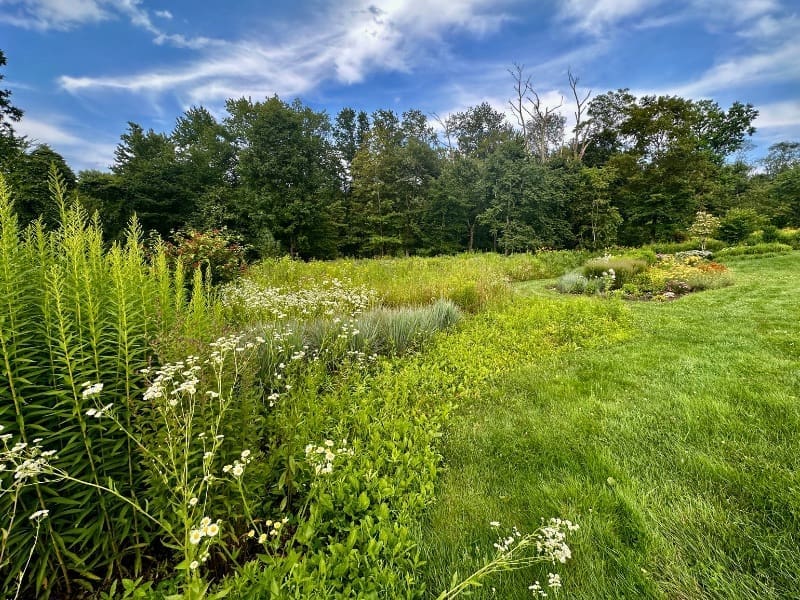
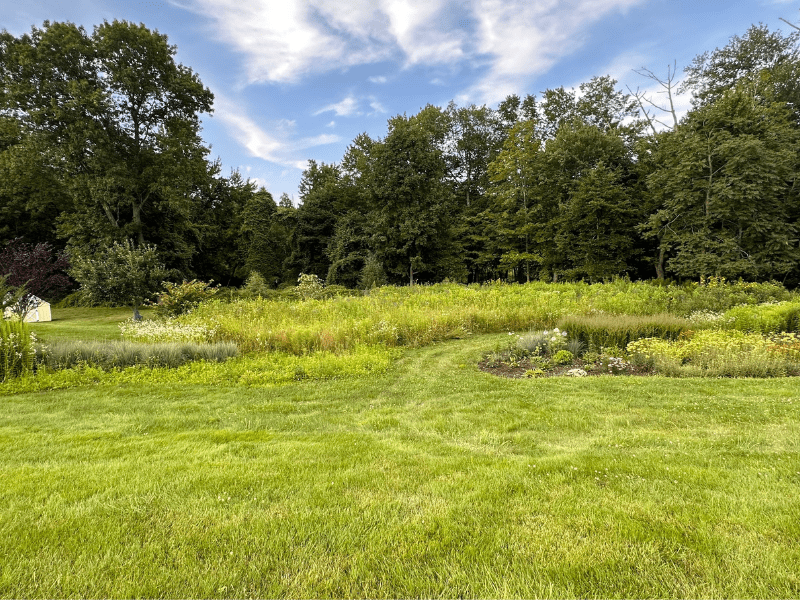
“It was February 2020, and the pandemic had just begun. I was working from home, looked out at my property, and realized my beautiful woodlands were slowly getting strangled by a relentless invasion of non-native plants – aka invasives. I was almost in tears when I decided to reach out to Dan Holmes to see what we could do to remedy the noxious weeds. Determined to reclaim the beauty of my woodlands, we decided to clear the area and plant a wildflower meadow to support the pollinators. I’m happy to say my yard is now lush and thriving with bees, butterflies, and a beautiful color palette of gorgeous flowers. It is easy to maintain, brings me endless joy, and colors my world!”
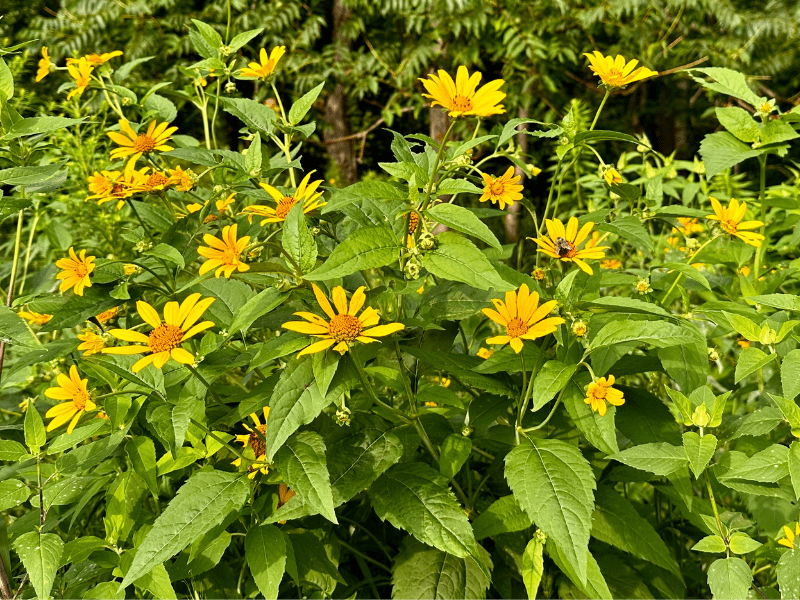
False sunflowers reaching for the sky.
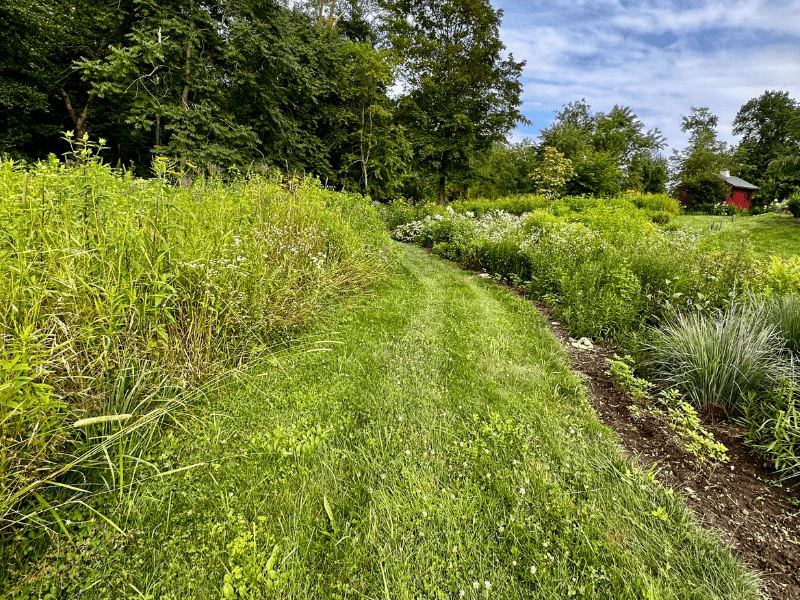
Spectacular blooms line this meandering meadow pathway.
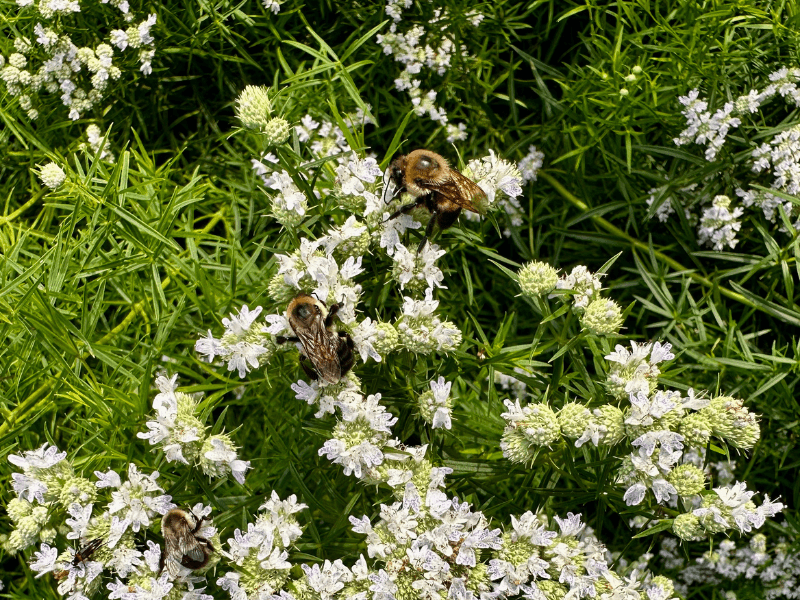
Eupatorium hyssopifolium (Hyssop leaved bonneset) – in full bloom for pollinators, butterflies, and other beneficial insects.
The perfect mix of native plants and perennials.
An explosion of purple Monarda (Bee Balm) begins.
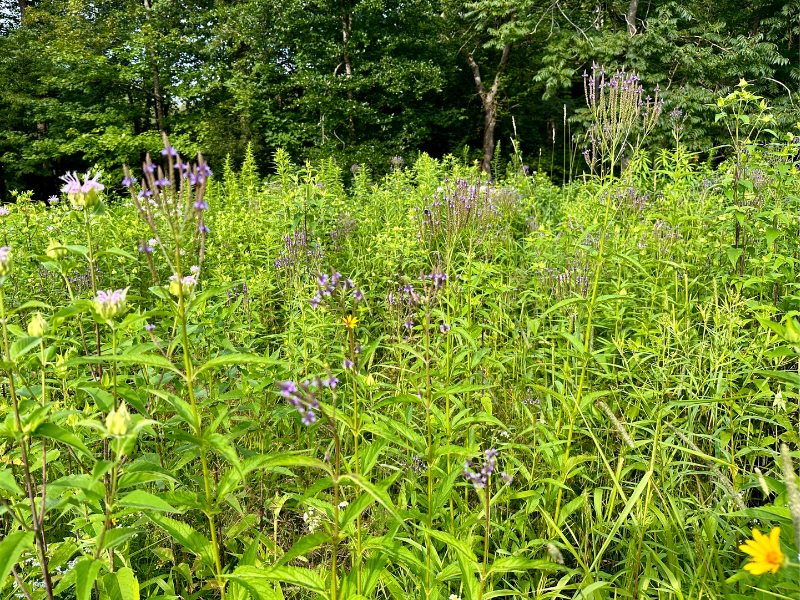
A stunning patch of purple natives.
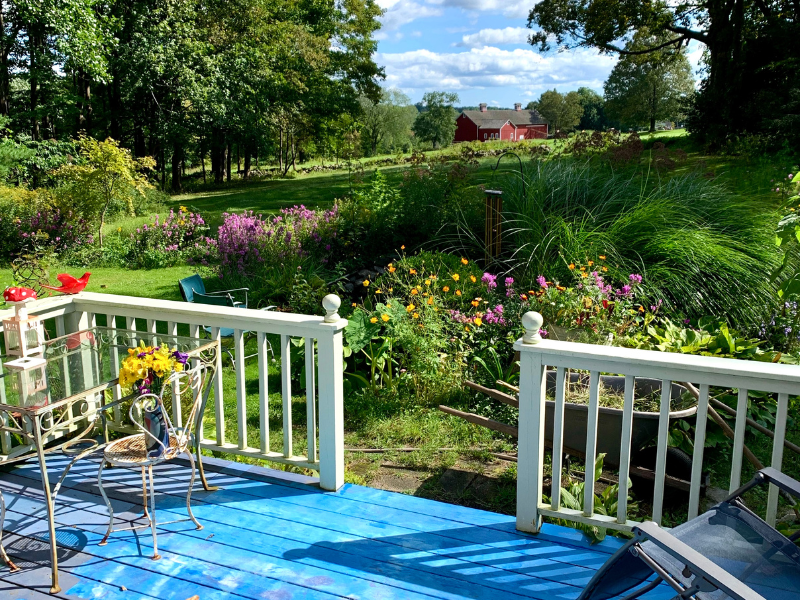
The pastoral view from the house.
The vibrant colors of fall in the meadow. This visual blog is the perfect, example of the beauty and balance that a meadow brings to people and pollinators alike.
Interested in seeing if a meadow is right for your own landscape?
When it comes to watering new plants and shrubs, finding the right balance is key to promoting healthy growth. Both over-watering and under-watering can be harmful, so it’s important to pay close attention to your new plantings.
Here are some general guidelines to help you care for your new plants and shrubs:
Watering Frequency:
Newly planted shrubs and plants typically need more frequent watering than established ones. For the first few weeks after planting, water every two to three days to keep the soil consistently moist. If we experience an extended dry spell with no rain, daily watering may be necessary.
Amount of Water:
Aim for a thorough, deep watering each time. Apply enough water so that the top 6–8 inches of soil are moistened. This encourages roots to grow deeply, which promotes stability and better access to nutrients.
Time of Day:
Water early in the morning or late in the afternoon. This reduces water loss through evaporation and allows foliage to dry before evening, lowering the risk of fungal diseases.
Monitor Soil Moisture:
Check soil moisture regularly by inserting your finger or a moisture meter into the ground. If the top inch or so feels dry, it’s usually time to water.
Adjust for Weather Conditions:
Environmental factors like temperature, humidity, and rainfall will affect your plants’ watering needs. During hot, dry periods, you may need to water more often, while rainy weather may require less supplemental watering.
Mulch Application:
The layer of organic mulch we’ve added around your plants and shrubs helps retain soil moisture, suppress weeds, and regulate soil temperature.
Please note: Some plants may require deep, thorough watering throughout their first year, or at least through the first summer—especially if drought conditions develop. This can also apply to established plants. In some cases, transplanted plants may need supplemental watering for up to two years.
Bottom line: Observe your new plants closely and adjust your watering routine as needed. This attentive approach will help ensure optimal growth and long-term health.
If you have any questions, please don’t hesitate to reach out at (203) 270-3331. We’re here to help.